
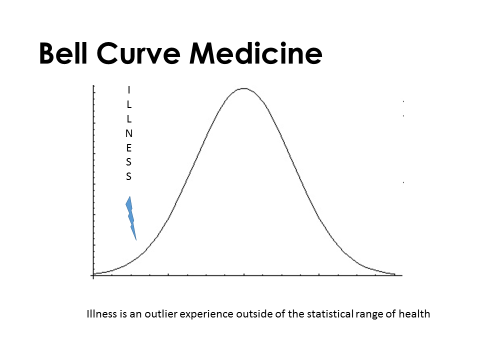
 In the bell curve model of health illness is an outlier experience separated from the statistical range of health. Inside the bell curve are the normed experiences deemed to align with health. In this model health is also linked to additional normative processes around age, weight, body shape, physical activity, mood, and thinking. Furthermore, this medical model overlaps with other bell curve models of social integration based on culture, skin color, gender, and sexual orientation.
The pull or push for health and healing which means moving towards inside the bell curve is, because of its normative aspect, psychologically and emotionally oppressive and elicits resistance. This is maybe one reason why the overall compliance with medical recommendations hovers still around 50%. Fitting the middle of the curve is a privilege and not attainable to all and for some it’s not even something they would want to aim for. This model devalues the outlier experience and denies it’s rightfulness, as well as the identity and culture that comes with it. This is especially relevant when it comes to so called chronic health conditions or different abilities, experiences around which individuals develop peer identities[1]. It explains why new healing technologies and treatments (such as cochlear implants) are confronted with resistance from some. The process of “healthstreaming” has a racist undertone because it disregards the meaning of the illness experience and the peer identity that can come with it. We used to think of the gain that comes with illness as a psychological problem. I rather think we need to add a new perspective that actually accepts the possibility of true values in aspects of illness and disease experiences.
[1] For more information about peer identities see Andrew Solomon’s book: Far From the Tree.